

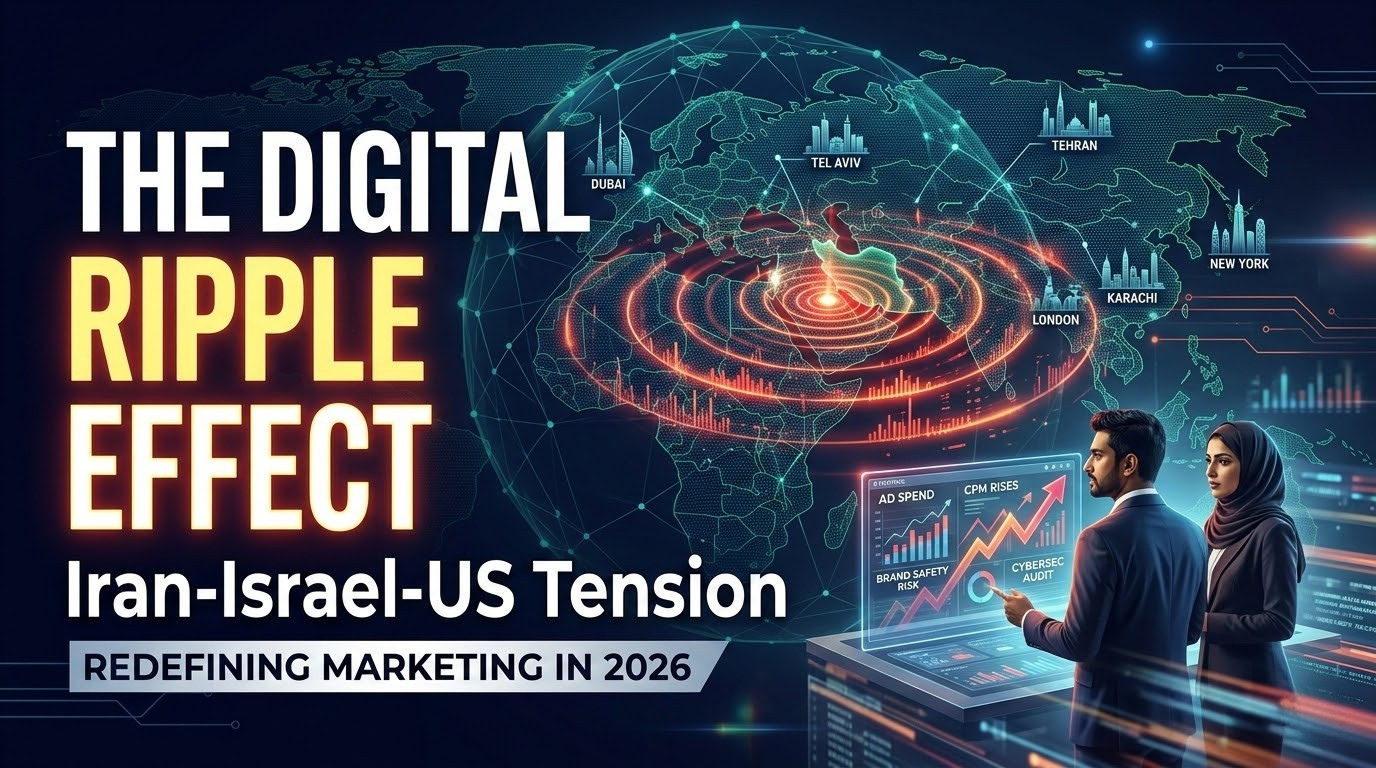
In the interconnected world of 2026, a geopolitical spark in the Middle East doesn’t just stay in the Middle East—it vibrates through every fiber optic cable and data center across the globe. For digital marketing agencies, the ongoing friction between Iran, Israel, and the United States is no longer just a news headline; it is a critical variable in ad algorithms, consumer behavior, and campaign ROI.
1. The Surge in Cyber-Volatility and Brand Safety
Modern warfare is “hybrid.” When tensions peak, state-sponsored cyber activities increase.
- The Risk: Ad networks often see a spike in bot traffic and misinformation sites during these periods.
- The Solution: Agencies must prioritize Brand Safety. Your ads could accidentally appear next to sensitive or violent war footage, damaging your brand’s reputation. Using advanced AI exclusions and “Negative Keyword” lists (e.g., missile, conflict, strike) is now mandatory.
2. Ad Inflation: The Cost of Global Uncertainty
Geopolitical instability usually leads to fluctuations in oil prices and global trade.
- CPM & CPC Spikes: As physical supply chains (like the Strait of Hormuz) face threats, businesses often pull back on inventory-heavy ads, while “Panic Buying” or “Essential Goods” sectors flood the auction market.
- Algorithm Shifts: Platforms like Meta and Google often tweak their algorithms to prioritize news and “authoritative content,” which can temporarily lower the organic reach of lifestyle or luxury brand content.
3. The “Sentiment Shift” in Consumer Behavior
In 2026, consumers are more socially conscious than ever. A “hard-sell” advertisement during a period of high international anxiety can come across as tone-deaf.
- Empathy-Led Content: Data shows that during geopolitical crises, brands that pivot to messaging focused on community, stability, and support see 20% higher engagement than those sticking to aggressive sales tactics.
- The “Pause” Button: Agencies must be ready to hit pause on automated campaigns. A pre-scheduled humorous tweet can become a PR nightmare if it goes live during a major military escalation.
4. Supply Chain Disruptions and E-commerce SEO
The conflict affects the physical movement of tech components. If tensions impact semiconductor routes or regional shipping:
- SEO Impact: Product “Out of Stock” labels can hurt your search rankings. Agencies must switch focus to Top-of-Funnel (ToFu) content—educational blogs and brand awareness—rather than direct product conversion until stock stabilizes.
- Local SEO: We are seeing a trend where brands are shifting budgets from “Global” to “Hyper-Local” to avoid the volatility of international logistics.
5. Cybersecurity as a Marketing Service
In 2026, a digital marketing agency is also a guardian of data. With the rise of regional hacking groups:
- DDoS Protection: Agencies must ensure client websites are hosted on hardened infrastructures. A site crash during a conflict-related cyber surge isn’t just a technical fail; it’s a marketing catastrophe.
Key Takeaways for Your Strategy
| Factor | Immediate Impact | Strategic Pivot |
| Ad Placement | High Risk of Misplacement | Enable strict AI Brand Safety filters |
| Content Tone | Risk of appearing “Tone-Deaf” | Switch to Empathy & Value-based hooks |
| Logistics | Shipping delays/High costs | Focus on Local SEO and Digital Goods |
| Data Security | Increased Phishing/Hacking | Implement Zero-Trust Security for client Portals |
The Bottom Line
The digital landscape of 2026 is a reflection of global stability. As an agency, your job isn’t just to “run ads”—it’s to navigate the Digital Fog of War. By staying agile, empathetic, and security-conscious, you can protect your clients’ interests even when the world is in a state of flux.
6. The “Sovereign Internet” & Platform Fragmentation
When conflict escalates between major powers like the US, Iran, and Israel, we see a move toward “Splinternet”—where countries restrict global platforms (like Google or Meta) in favor of local alternatives.
The Shift: If your clients target regions affected by sanctions or digital blocks, you cannot rely on a “one-size-fits-all” Global SEO strategy.
Agency Pivot: You must help brands build “Owned Media” (Email lists, SMS, and private WhatsApp communities). In 2026, your own database is the only thing that doesn’t disappear if a platform gets banned overnight.
7. Shift in Video Marketing: From Polish to “Raw Truth”
During geopolitical crises, high-production, flashy commercials often feel “fake” or insensitive to a stressed audience.
The Trend: We see a massive shift toward UGC (User Generated Content) and raw, “behind-the-scenes” storytelling.
Marketing Impact: Audiences in 2026 prefer transparency. Brands that show the human side—how they are supporting their employees or maintaining services despite global hurdles—gain more loyalty than those running standard sales ads.
8. The “Energy-Efficiency” of Digital Ads
Tensions in the Middle East often lead to fluctuating energy and fuel prices. This has a hidden “Green SEO” impact.
Data Center Costs: As energy costs rise, the cost of hosting and running massive AI-driven ad campaigns also increases.
SEO Strategy: Optimize website performance (Core Web Vitals) not just for rankings, but to reduce server load and data transfer. “Lightweight” digital footprints are becoming a selling point for eco-conscious and budget-conscious brands in 2026.
9. Hyper-Personalization vs. Privacy Sanctions
The US often responds to tensions with stricter digital sanctions and data privacy laws to prevent foreign influence.
The Challenge: Tracking users across borders becomes harder. Standard “Retargeting” pixels might face more restrictions in conflict zones.
The Solution: Agencies must master First-Party Data. Instead of chasing users with cookies, you help clients create value-driven Lead Magnets (E-books, Webinars) to get users to share their info voluntarily.
10. The Rise of “Crisis-Proof” E-commerce
With shipping routes like the Red Sea or Strait of Hormuz being “High Risk” zones, physical product delivery becomes unpredictable.
The Digital Shift: Many agencies are helping traditional retail clients launch Digital Products (Subscriptions, Online Courses, or Digital Gift Cards).
SEO Opportunity: Ranking for “Digital delivery” and “Instant access” keywords allows a brand to keep making money even if ships are stuck and logistics are halted.
Strategy Summary for Your Agency (NSA Digital)
| Factor | What to Change | Expected Result |
| Messaging | Move from “Buy Now” to “Reliability & Trust” | Long-term Brand Loyalty |
| Channels | Diversify from Meta/Google to Telegram/WhatsApp | Immunity to Platform Bans |
| Budgeting | Dynamic Bidding based on Geopolitical news | 15-20% Saving in Ad Spend |
| Security | Add Cyber-Audit to SEO packages | Zero downtime during Cyber-attacks |